Squeegee Spatula
A unique kitchen tool for sweetened condensed milk
April to June 2026
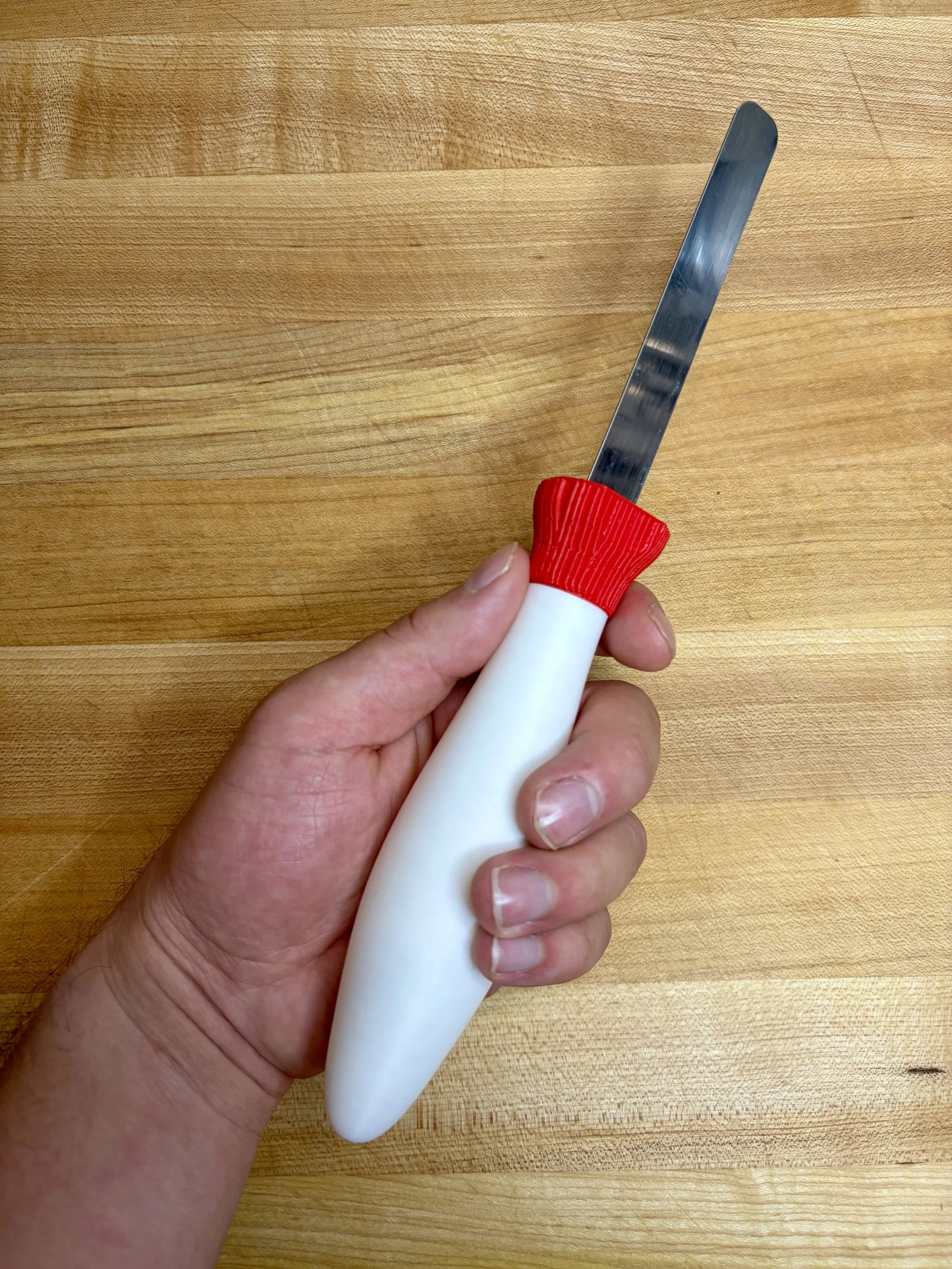
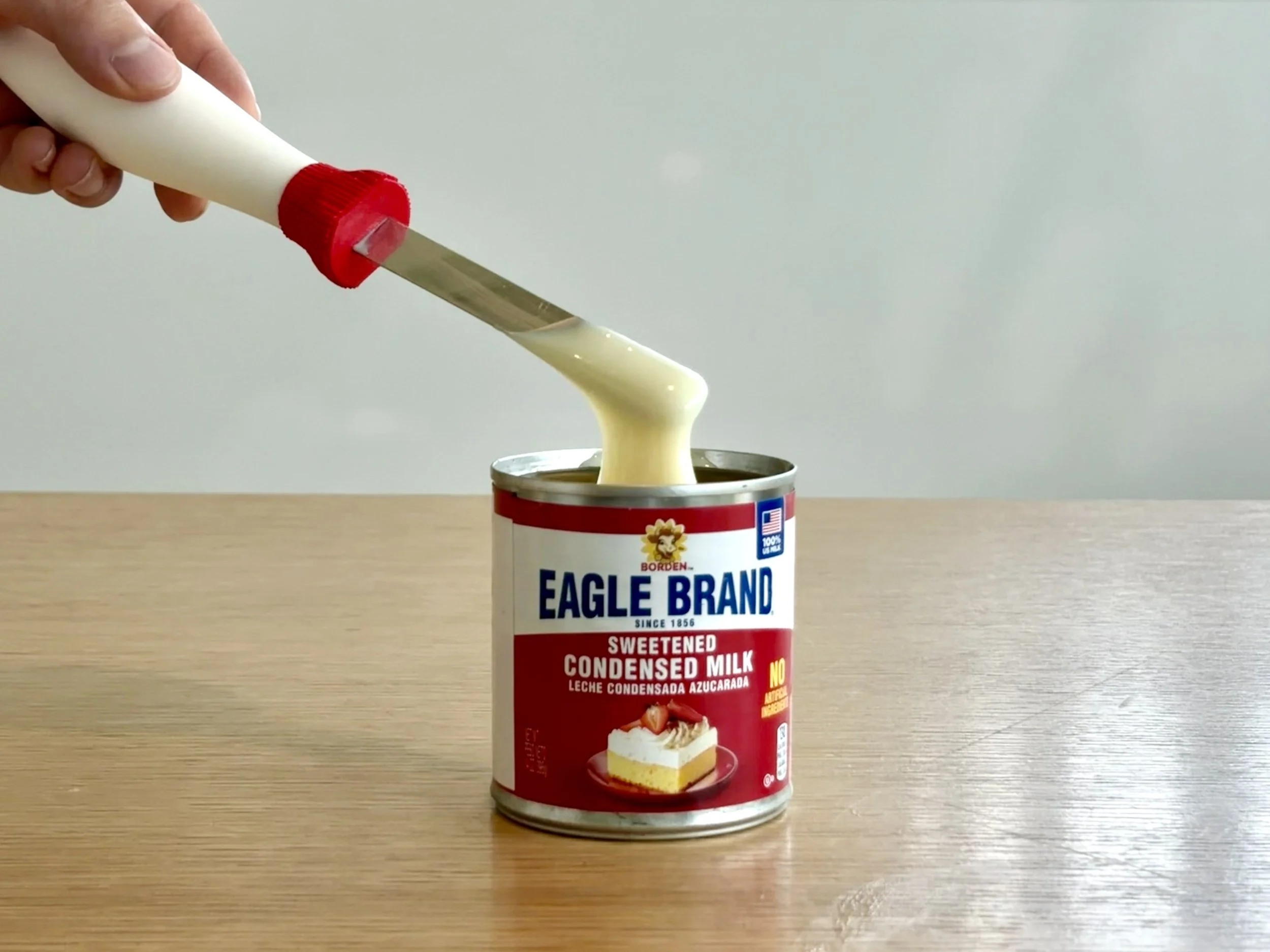
The squeegee spatula is hybrid kitchen utensil designed specifically to handle the challenging fluid dynamics of high-viscosity substances like sweetened condensed milk.
This project was born out of a desire to streamline the preparation of Vietnamese iced coffee, a personal favorite, by transforming a traditionally slow, sticky process into a precise, mess-free experience.
Background
Making Vietnamese coffee is one of my favorite rituals, but its defining ingredient is a persistent hassle. Sweetened condensed milk (SCM) is incredibly viscous and sticky. I usually spoon it into the glass first, and then brew coffee directly over it using a metal phin filter.
In practice, transferring SCM with a standard spoon is an inefficient battle against fluid dynamics. Because the milk flows so slowly and sticks to the spoon, I find myself constantly using my fingers to force it off. After a few frustrating scoops, I’d inevitably end up with sticky fingers and a messy counter. Existing kitchen utensils simply weren't designed to handle this level of viscosity at a single-serving scale.
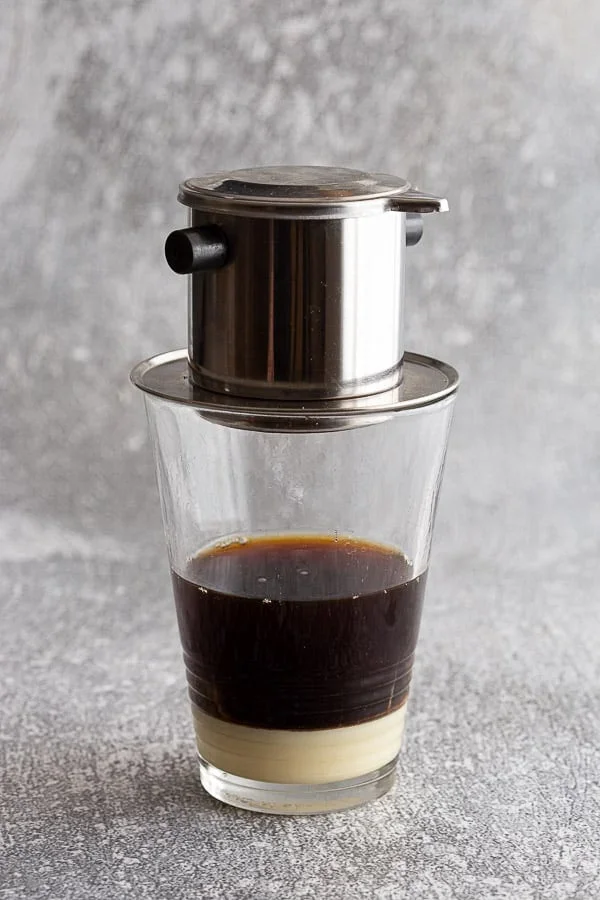
Vietnamese coffee brewed with a phin filter on top of sweetened condensed milk.
Problem Statement
Before committing to a hardware design, I considered decanting the milk into a squeeze bottle but realized it just relocated the problem. Squeeze bottles are wasteful to fill, notoriously difficult to clean, and introduce food safety risks with dairy. Pouring directly from the can causes inaccurate portioning, frequent overpouring, and a sticky mess along the rim. My solution required a dedicated utensil engineered to extract and cleanly shear high-viscosity fluids directly from the original can.
How might we design an ergonomic kitchen tool that cleanly extracts, transfers, and shears high-viscosity liquids at a single-serving scale, reducing product waste and mess?
Design Process
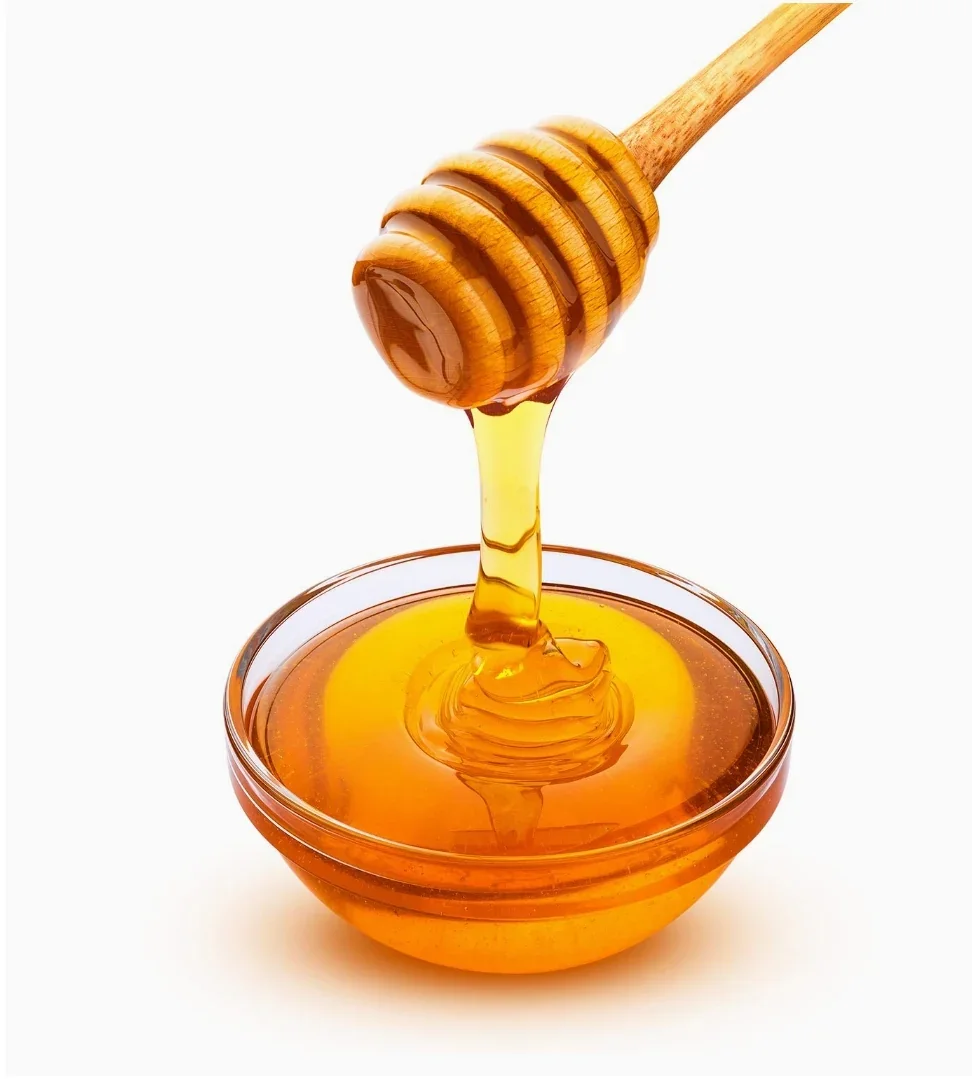
I began by evaluating existing kitchen utensils used for similar ingredients, most notably: honey. Honey has similar qualities to SCM, so I purchased various honey dippers to see how they’d perform with SCM.
Benchmarking - The Honey Dipper
A honey dipper works by trapping fluid within its grooves. Rotating the handle prevents dripping through continuous centripetal motion, which releases the honey only when the rotation stops.
I purchased a few honey dippers and spoons to see how different materials and geometries interacted with the SCM.
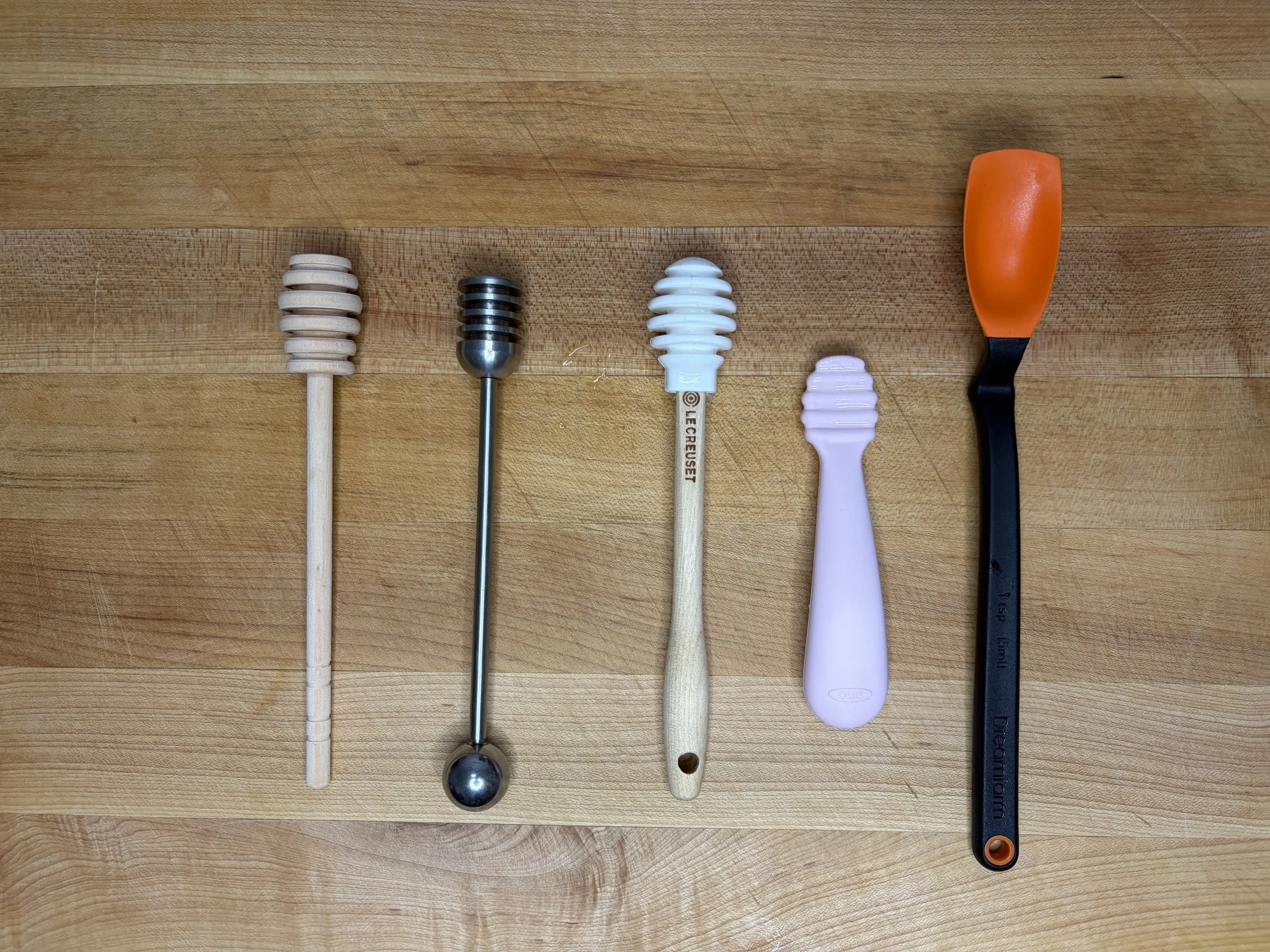
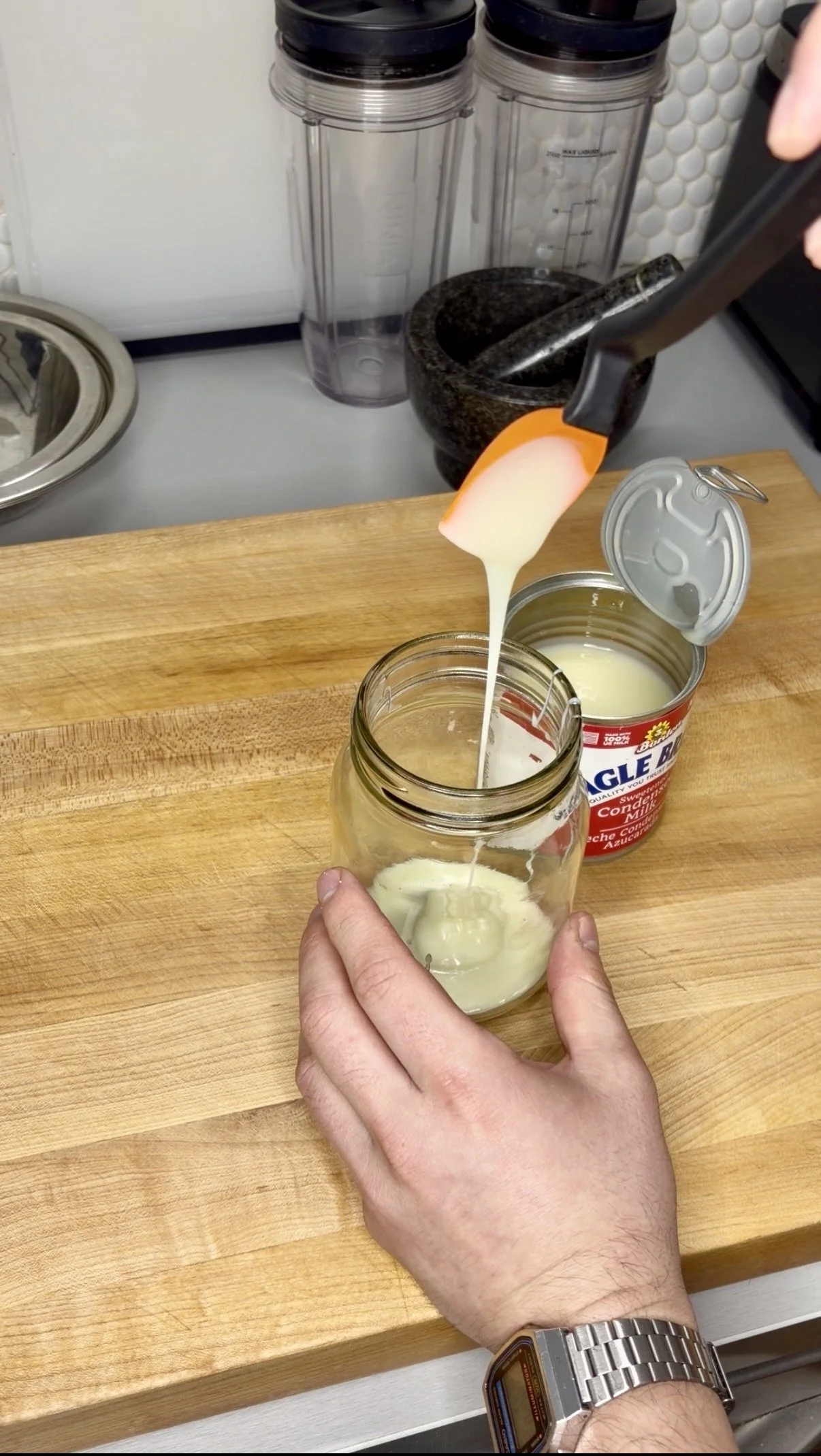
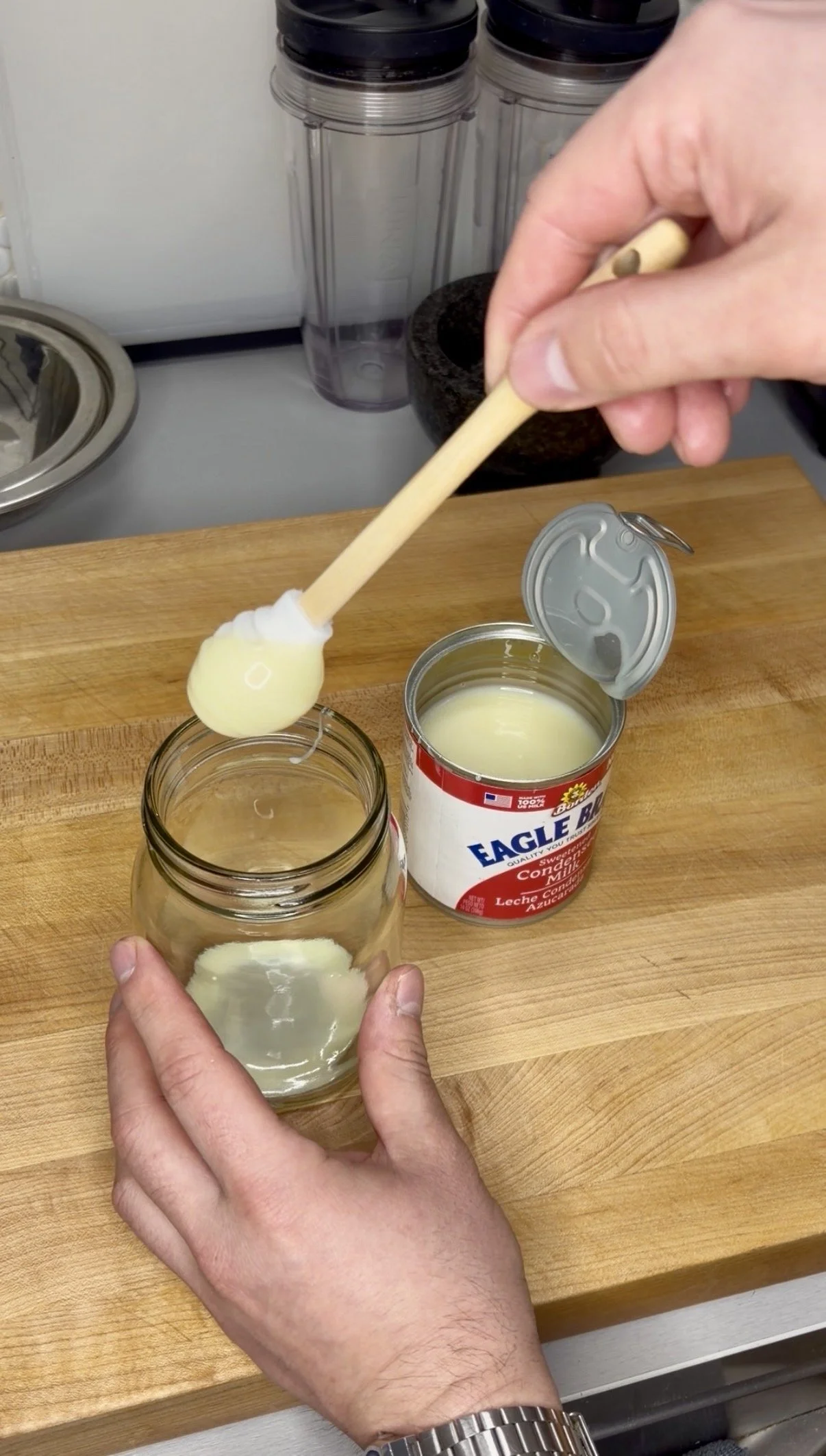
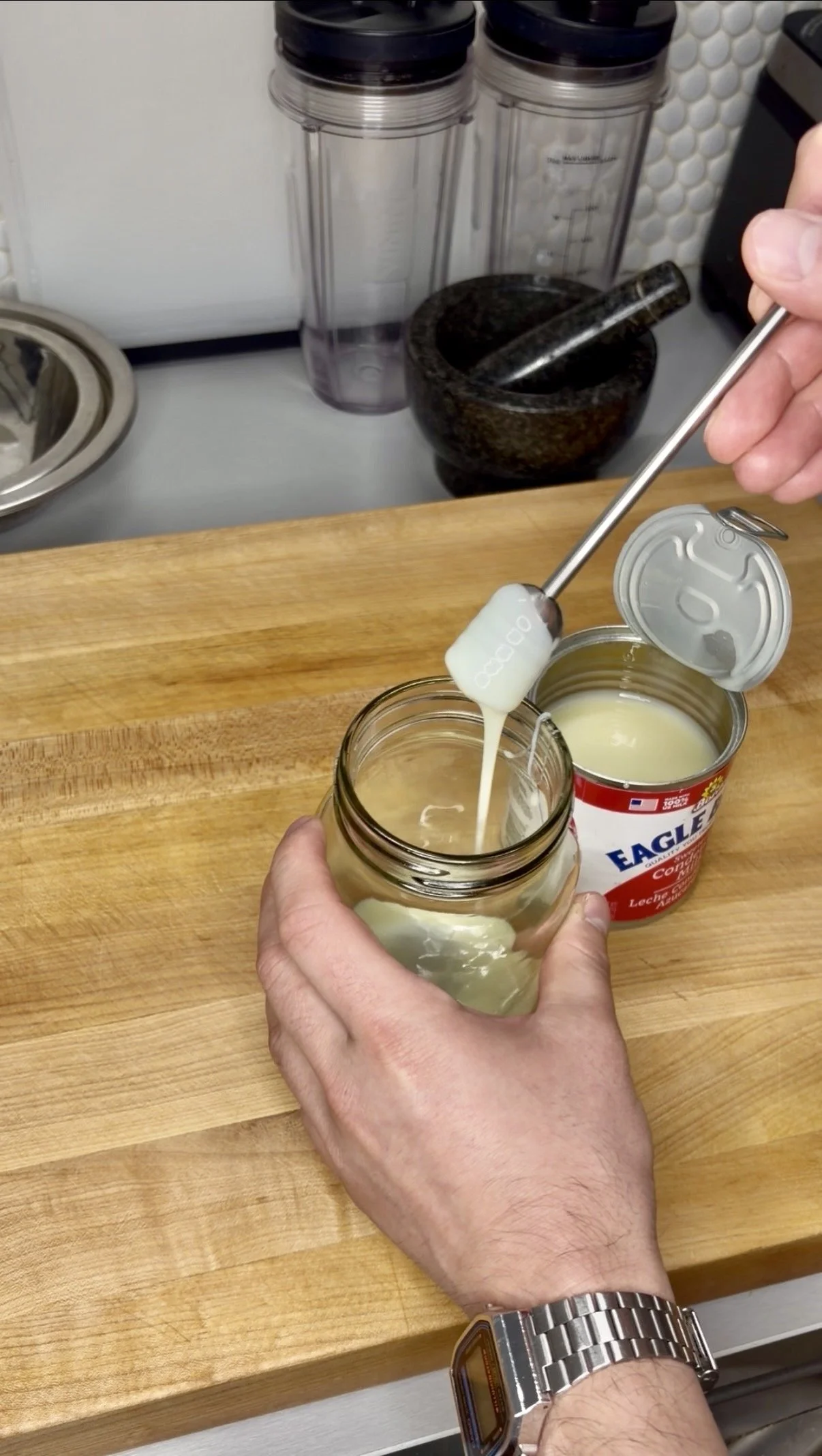
Testing Takeaways
Rotating the dippers effectively prevented SCM flow.
SCM is too viscous to enter the dippers’ ridges.
While material generally had a negligible effect on SCM flow, metal held onto the SCM the least.
The silicone spoon collected the most SCM, but led to the same wiping inclination as a metal spoon due to speed.
The ideal tool utilizes continuous rotation and smooth geometry to control the fluid’s flow, pairing that motion with a feature that instantly releases the SCM for a fast, mess-free transfer.
Initial Prototyping
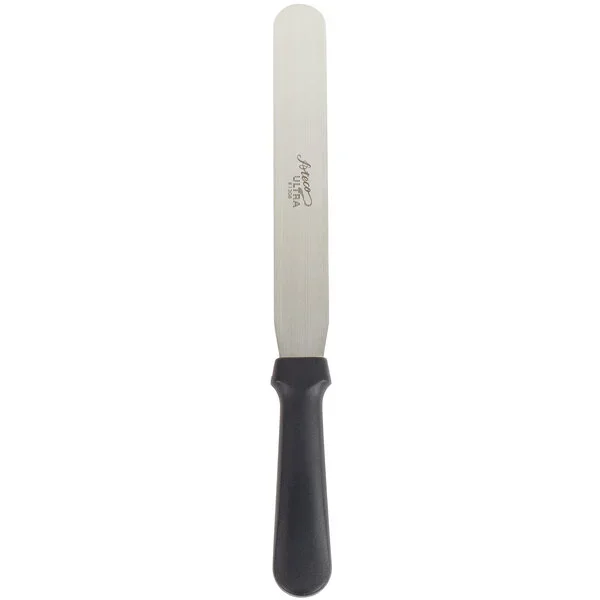
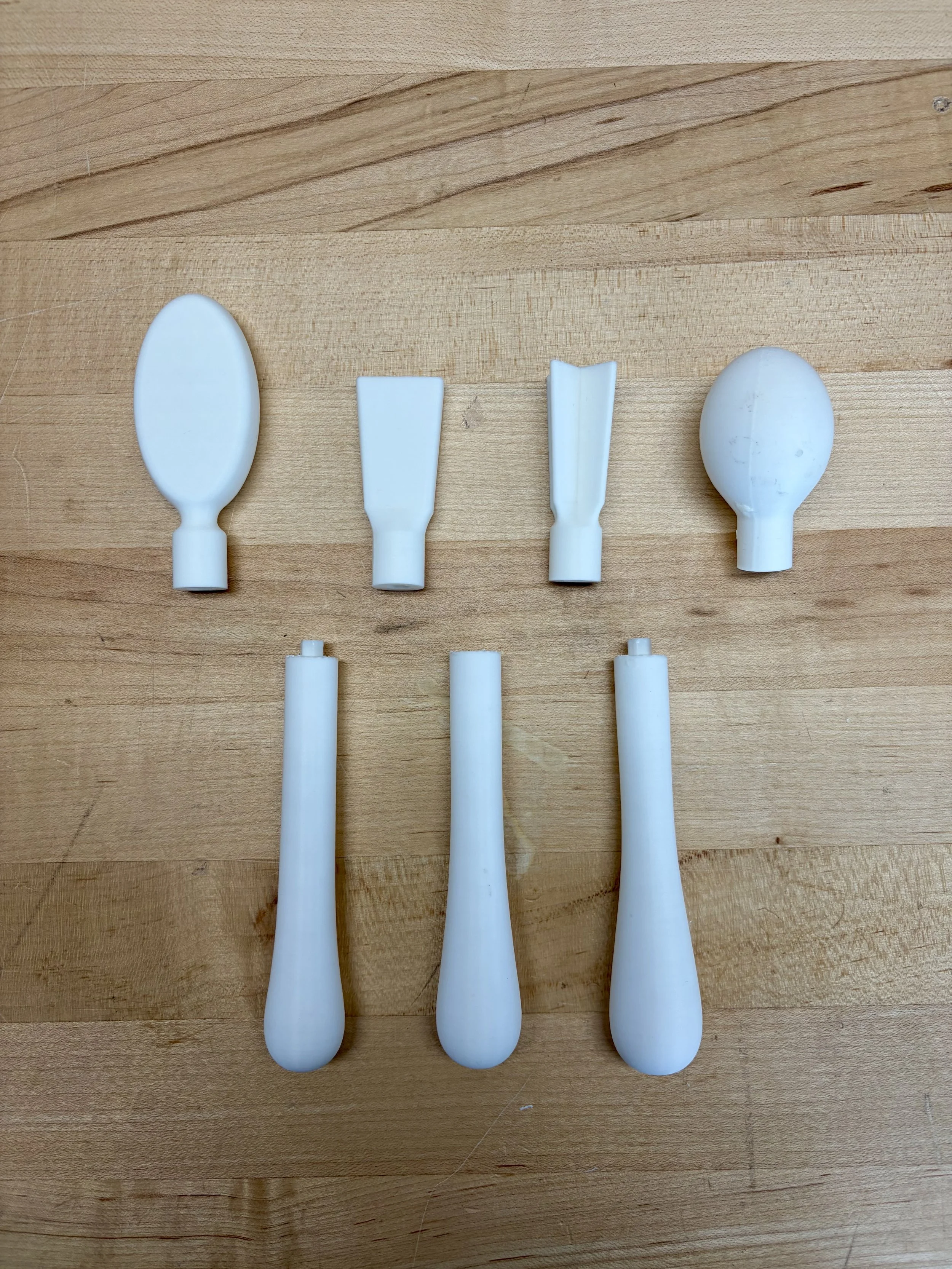
I iterated on different handle radii to evaluate the ergonomics of a rotating grip, while prototyping multiple head geometries to observe fluid adherence. While the handles provided direction, the heads performed suboptimally. I realized a thin steel blade was essential for optimal collection and twirling. The missing element was then was a way to actively shear the fluid off the blade rather than waiting for it to naturally drip.
While a small icing spatula effectively held and dispensed the SCM, it required manual intervention similar to a spoon to clean the blade. The next step was designing a controlled, mess-free mechanism to actively push the fluid off.
Ideation
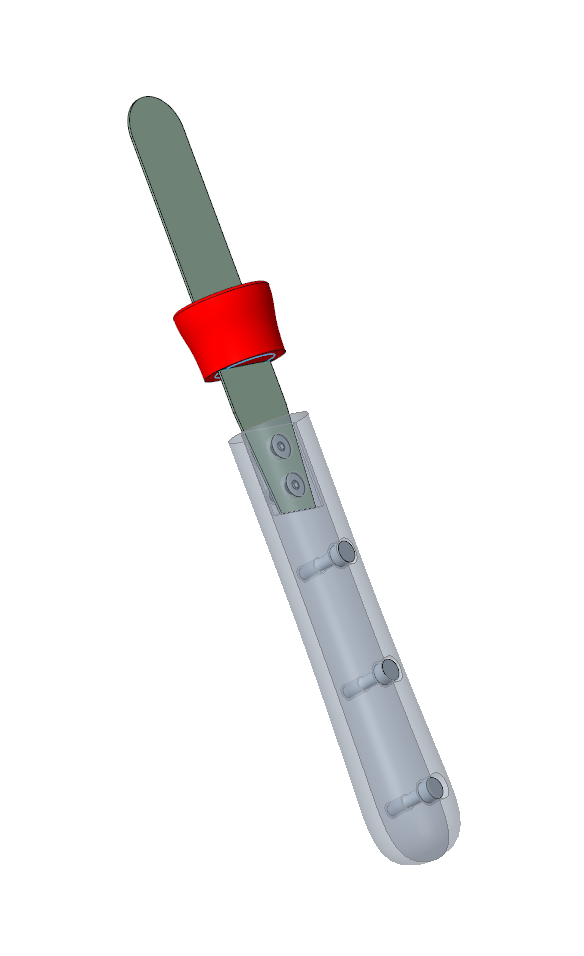
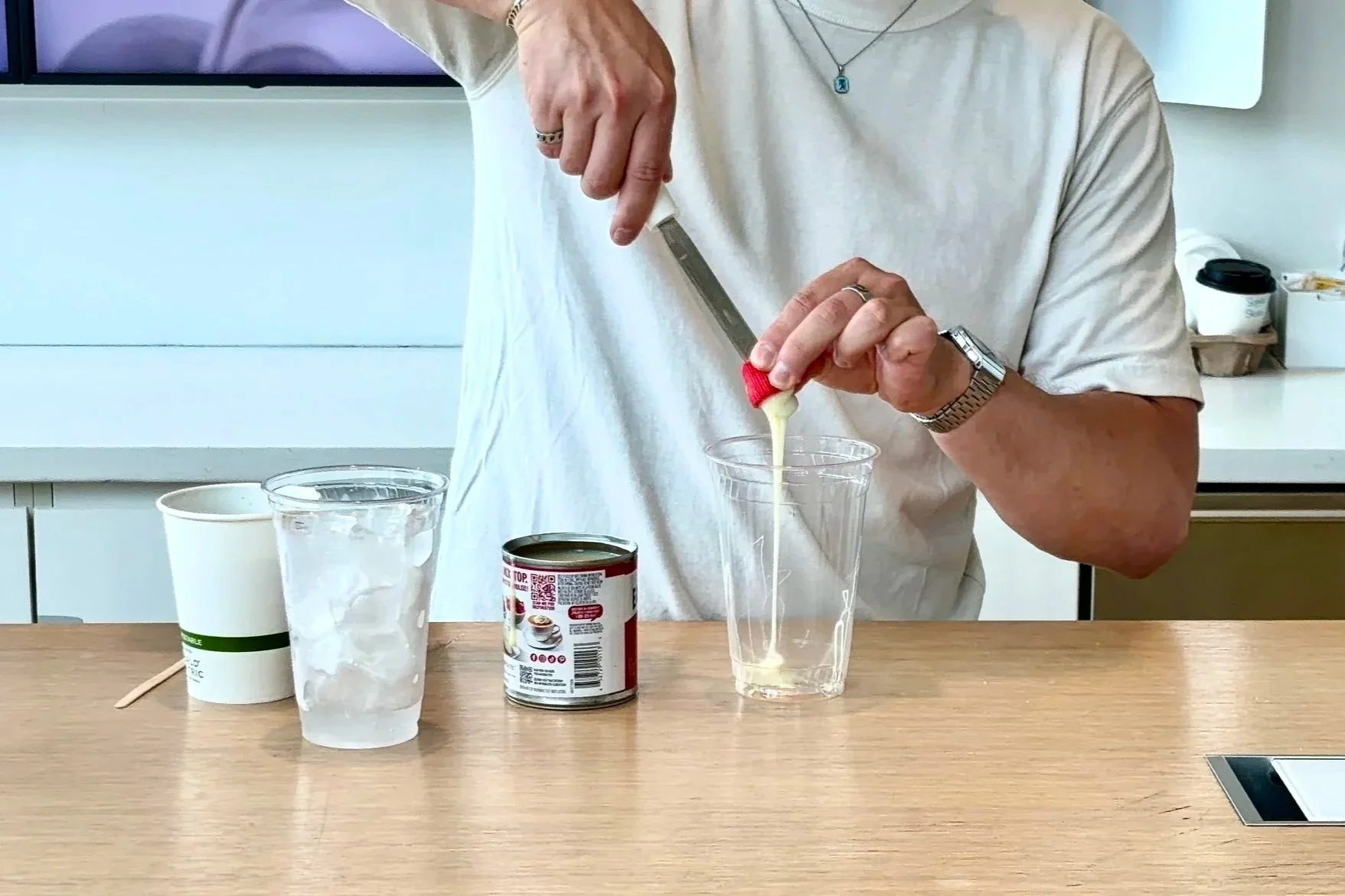
The design intent was to mimic wiping a spoon clean with fingers, replacing manual intervention with a functional mess-free squeegee collar.

Prototyping
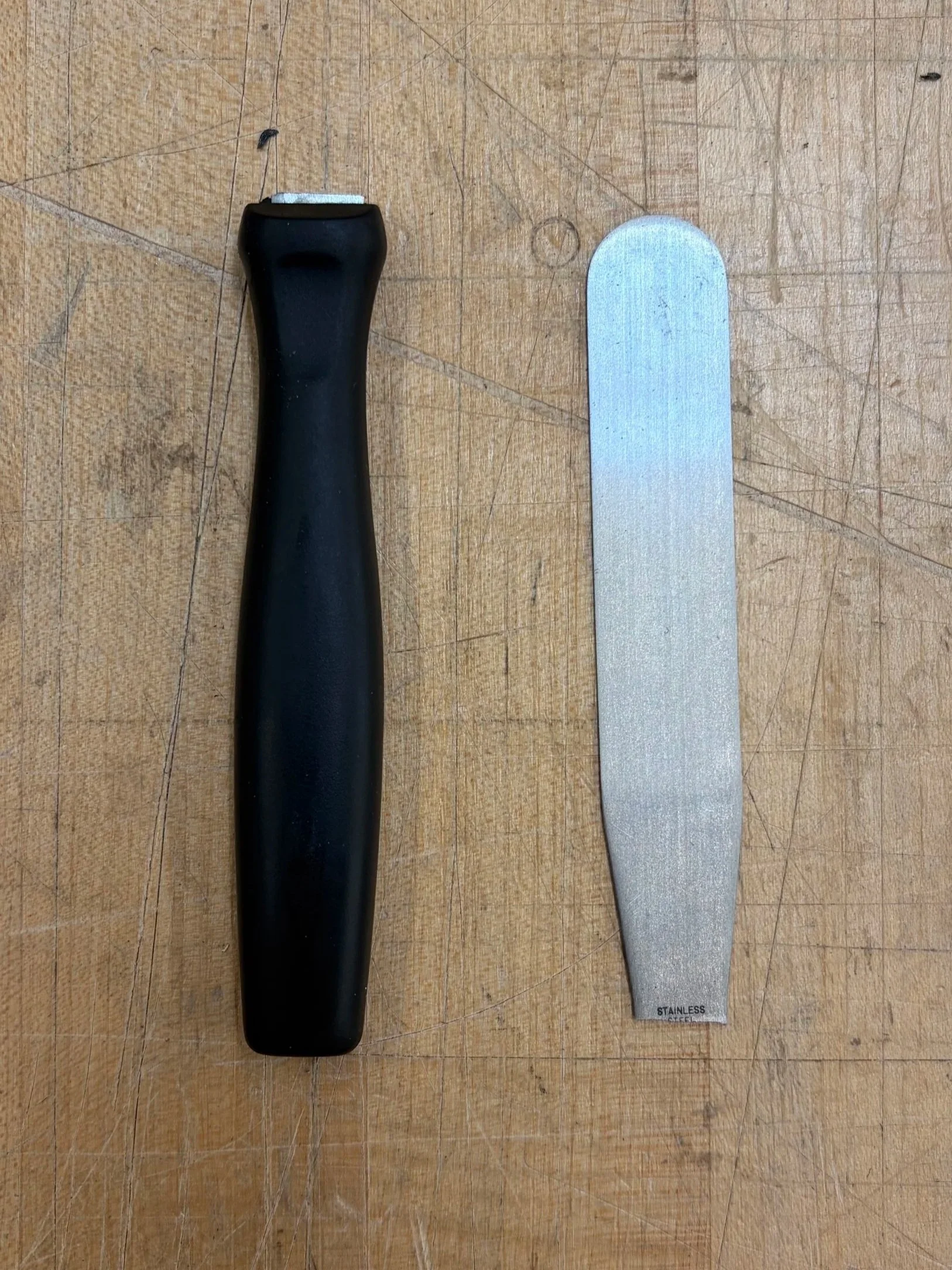
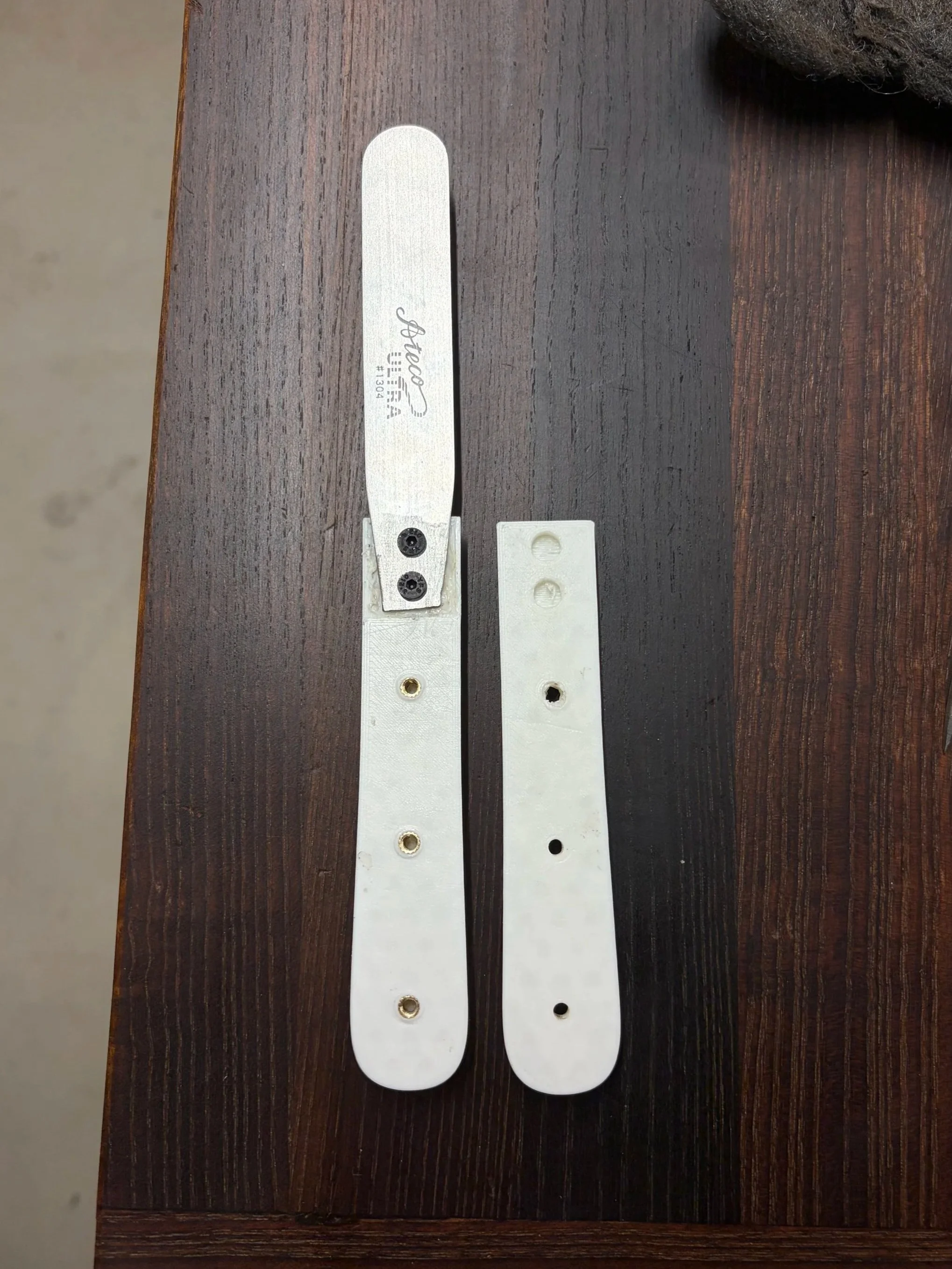
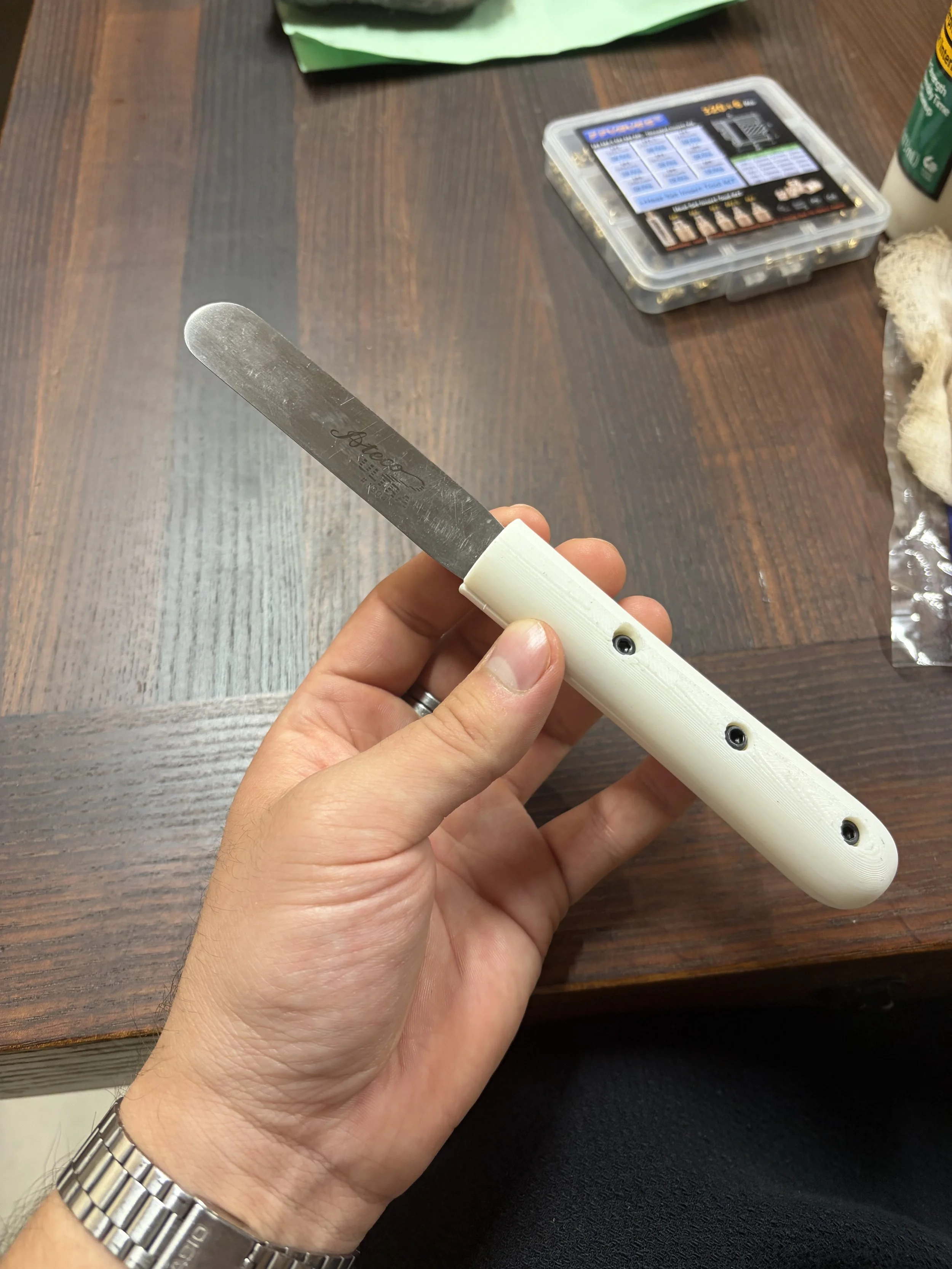
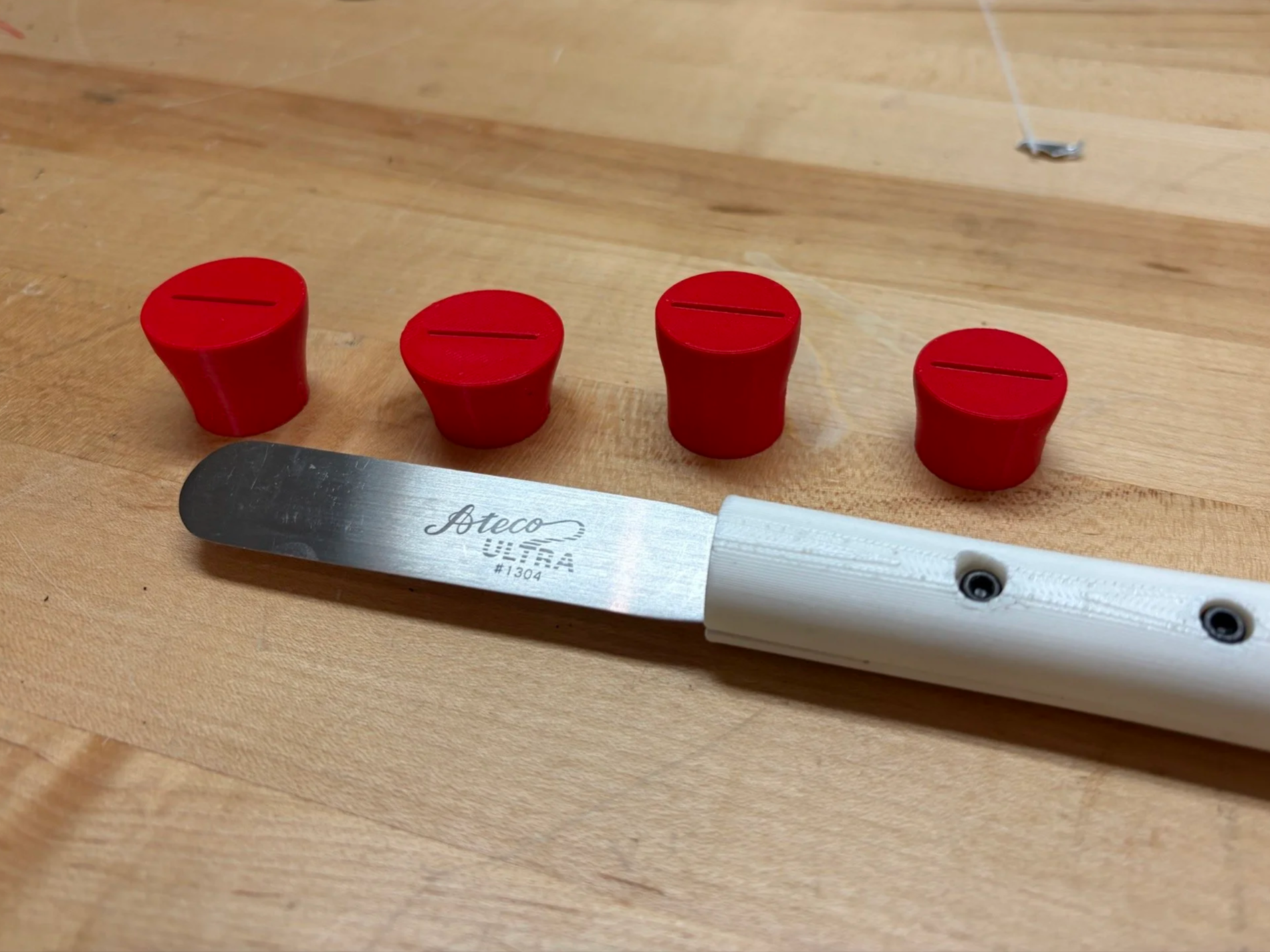
I sawed off the blade of a flat spatula and attached it to a 3D printed housing using M3 screws and inserts. This gave me a feel for a round handle (similar to a screwdriver) with a blade attachment. I then modeled different squeegee geometries to evaluate comfort and ergonomics and validated the functionality of my squeegee concept.
Spatula Blade + Round Handle
Squeegee Exploration
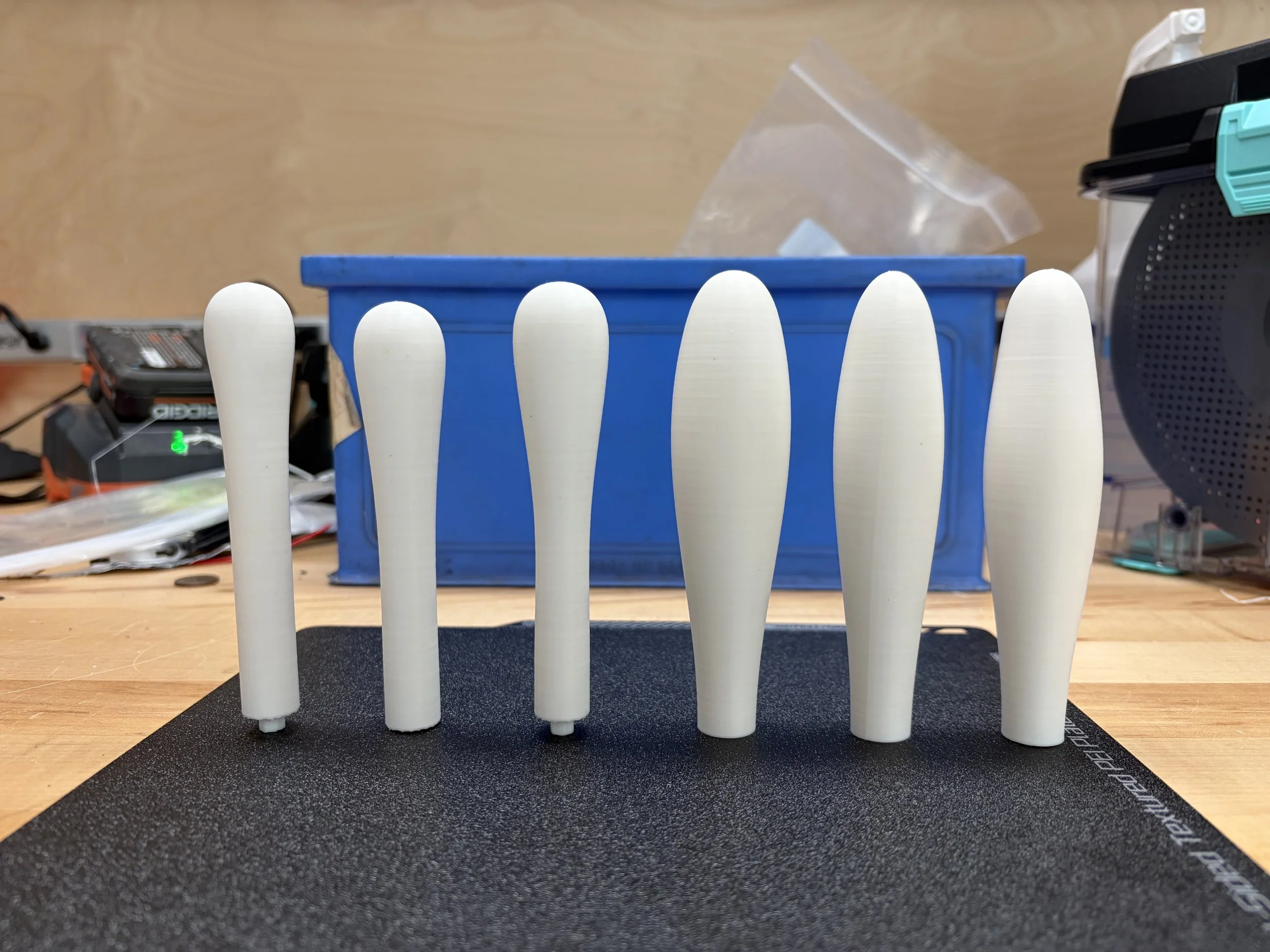
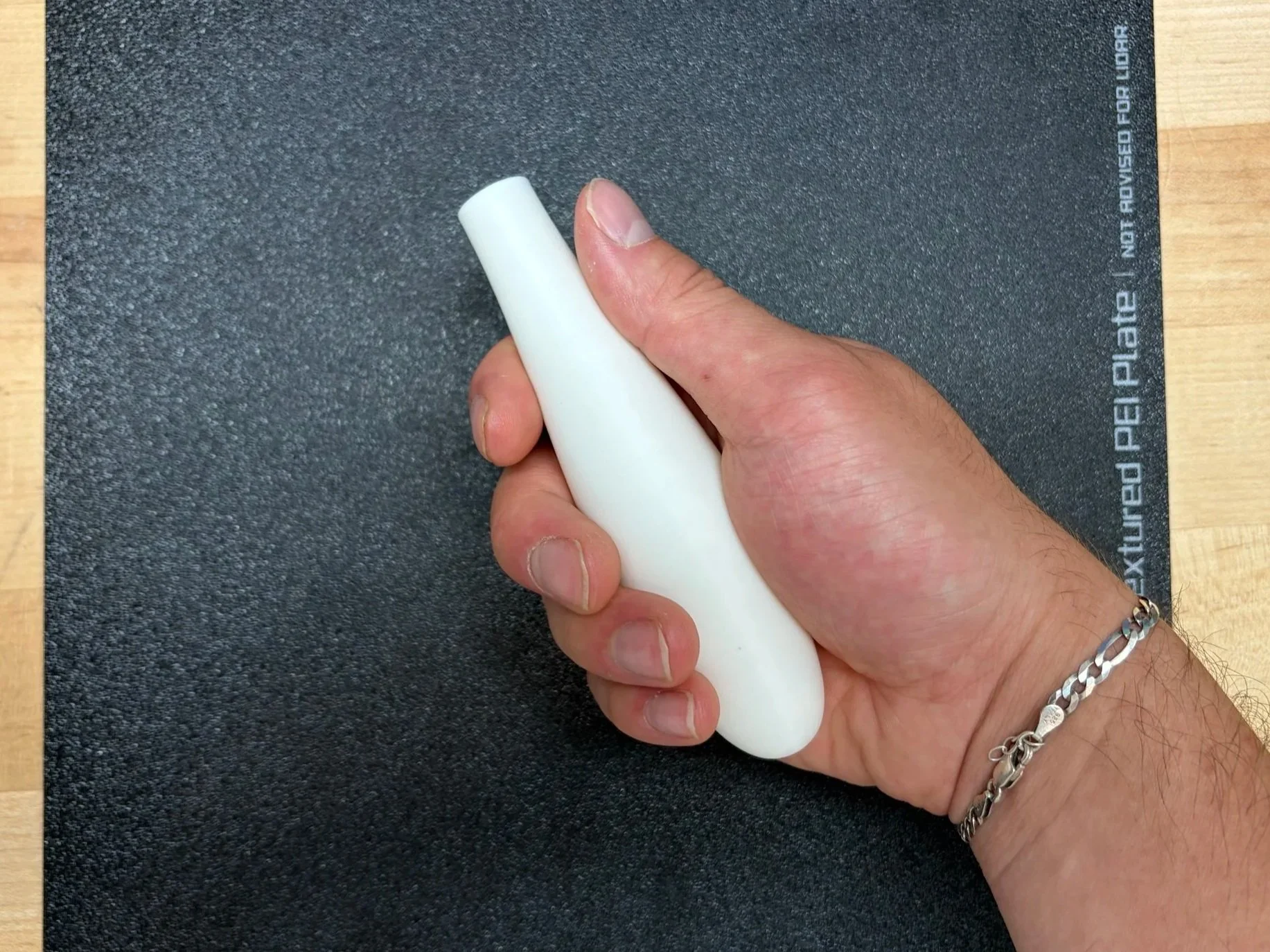
Handle Form Study
I iterated on handle geometry to optimize the ergonomics of a rotating grip, transitioning from a narrow profile to a thicker, bulbous form to maximize comfort across varied hand sizes. The grip geometry naturally guides the user's hand rearward, away from the squeegee collar, to enforce an intuitive, two-handed operation.
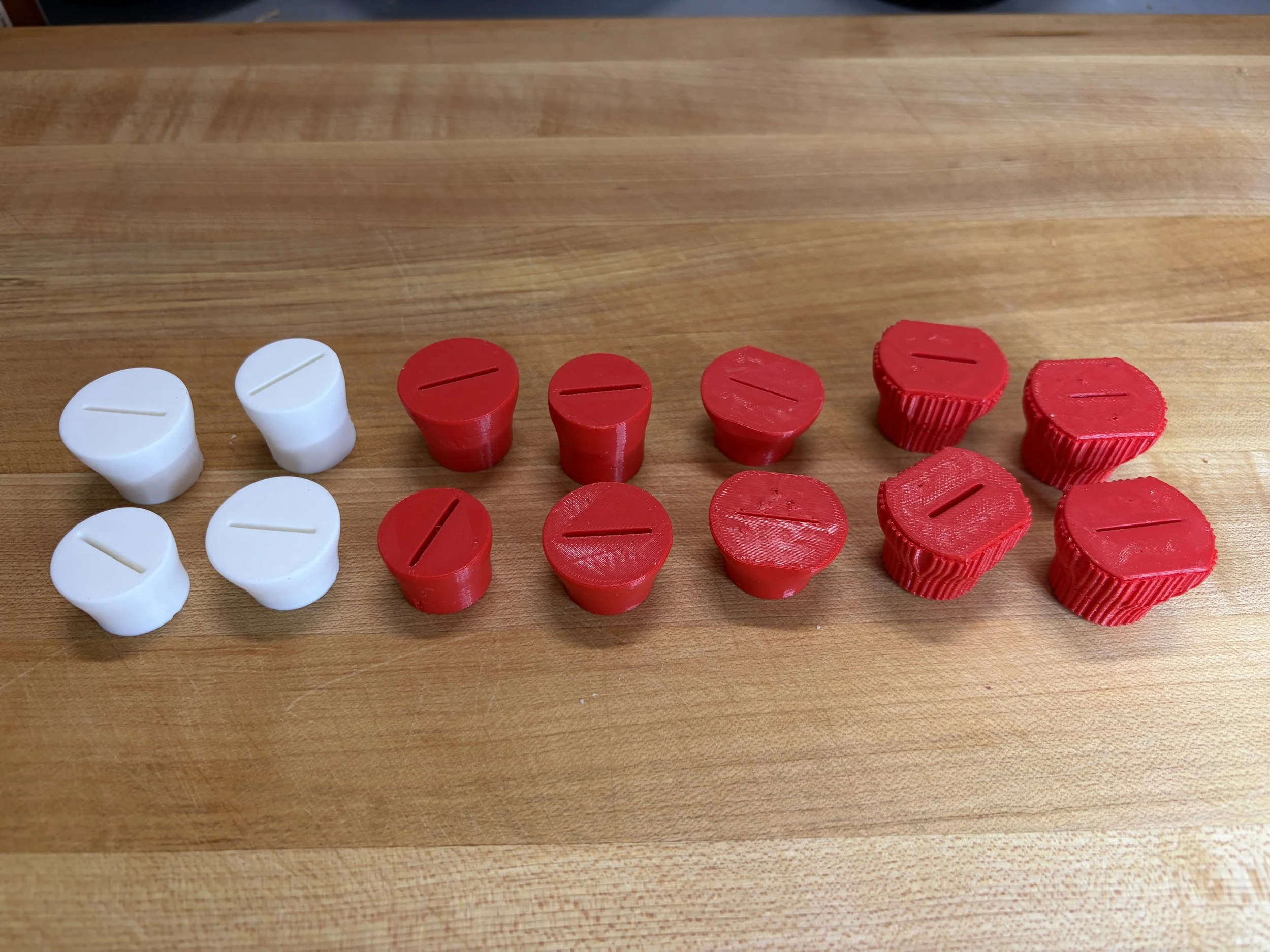
Squeegee Prototypes
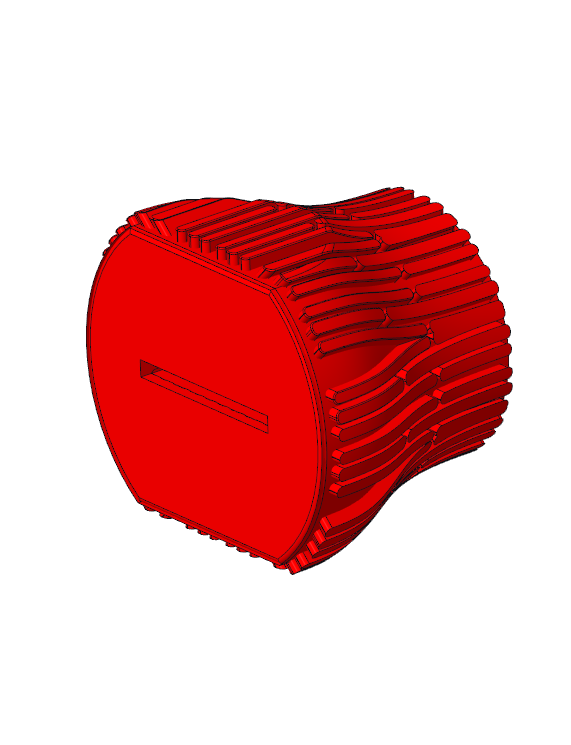
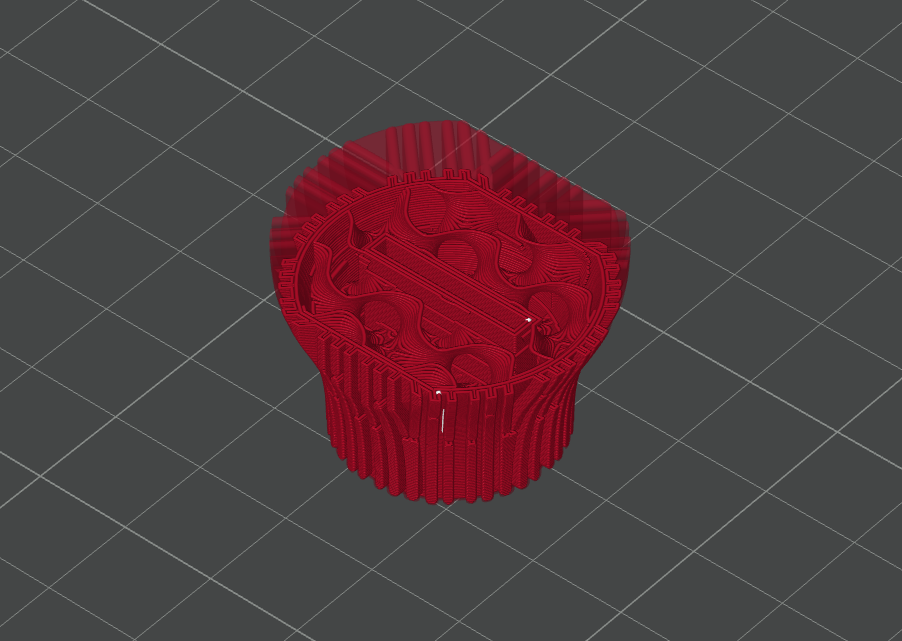
To dial in the fit and performance of the blade slot, I iterated on multiple squeegee prototypes using Bambu 95A HF TPU to simulate a soft silicone collar. Utilizing a gyroid infill pattern with varied densities allowed me to fine-tune isotropic pliability. Additionally, I integrated flat geometric faces to prevent the tool from rolling on flat surfaces, and added tactile texturing to improve ergonomics, aesthetic, and grip security.
Final Model
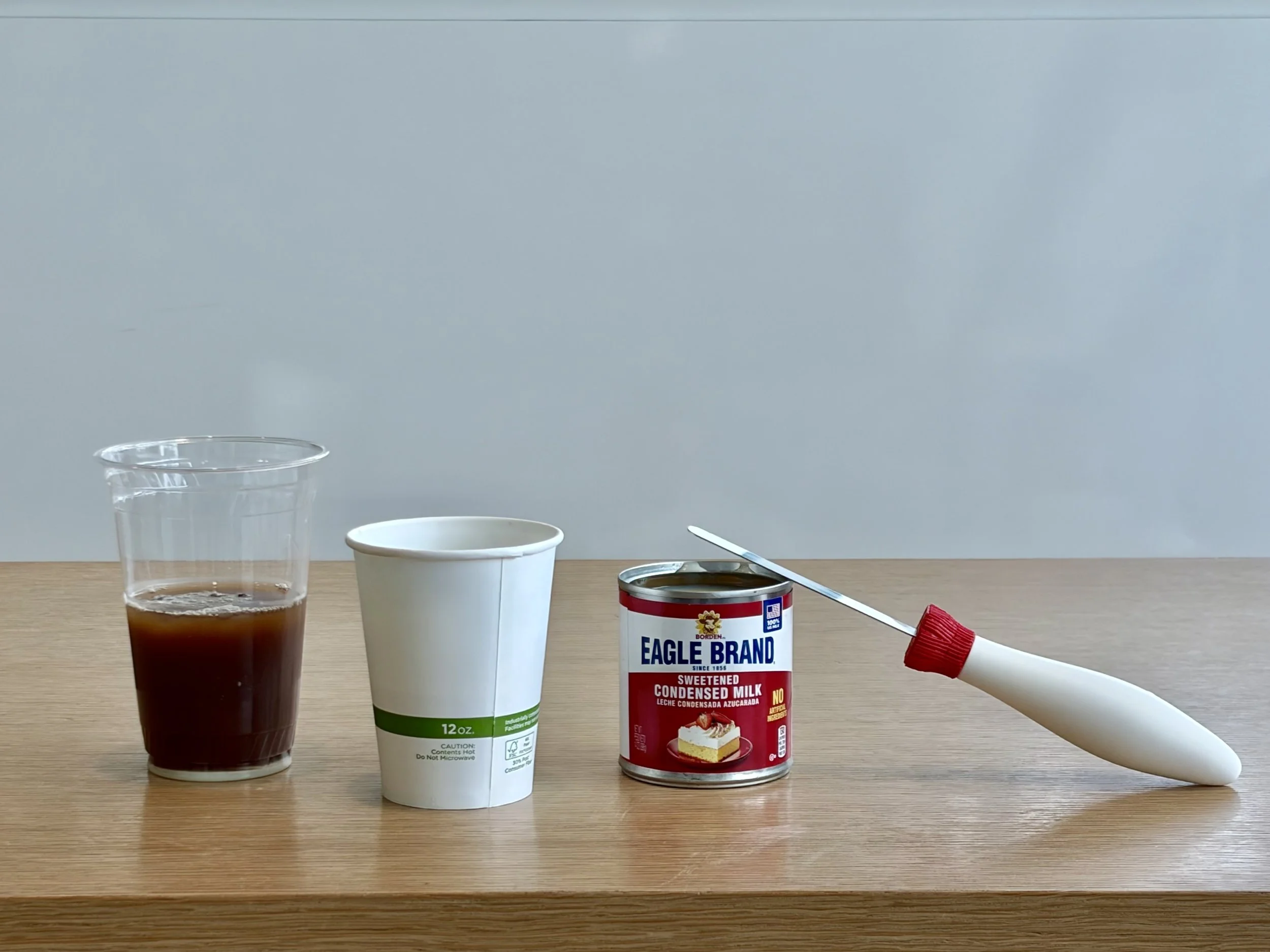
I laser cut a blade out of a scrap piece of thin stainless steel and glued it inside a 3D printed PLA handle. The final width of my squeegee slot was 1mm wider than the blade. The squeegee was printed with a gyroid infill at 10% density.
Final Thoughts
While the current model is successful, future iterations will focus on three key development areas:
Blade Width: Increase the blade width to maximize fluid volume and evaluate how it alters the overall form factor of the handle and squeegee collar.
Evaluate Alternative Materials: Experiment with different blade materials to improve fluid-adherence.
Standardize Volumetric Portioning: Conduct testing to quantify the average volume retrieved per scoop, optimizing the blade geometry to consistently yield a specific culinary portion (e.g., one tablespoon).
Broaden Scope: Evaluate the tool’s efficacy on alternative high viscosity ingredients like peanut butter, gochujang, and dulce de leche.